Don’t Drive Your Dive Guide Crazy
Essential Tips for New (and Not-So-New) Divers
Diving is an incredible experience… but it’s also an activity that requires responsibility, communication, and teamwork. If you’ve just earned your certification or still have limited experience, this article is for you.
At Lanzarote Non Stop Divers, we want you to enjoy every dive to the fullest—always prioritizing safety and the well-being of the entire group, including the dive guide. So take note: these tips will make your life (and the guide’s) much easier underwater.
The guide supports you… but your safety is your responsibility

Once you finish your first diving course and start joining guided dives, it’s easy to think the guide is in charge of everything. But there’s one essential rule you must understand:
👉 You are responsible for your own safety.
The dive guide:
- Leads the dive.
- Shows you the best spots
- Supervises the group
- Helps when things get complicated
But the guide is not your personal instructor and cannot focus on just one diver. Their attention is shared among the entire group.
The more responsible and communicative you are, the safer and more enjoyable the dive will be for everyone.
Before the dive: be honest and speak up
If you know who your guide will be, tell them about your real level of experience:
- Approximate number of dives
- High air consumption
- Equalization issues
- Nervousness, cold, buoyancy problems, etc.
There’s absolutely nothing wrong with saying: “I don’t have many dives yet” or “I’m still a beginner.”
Every diver started somewhere. Trust us—the guide will notice underwater anyway, so it’s always better to say it beforehand. If you don’t, they may think you’re not just inexperienced, but careless.
With this information, the guide can:
- Position you correctly within the group.
- Assign you a more experienced buddy.
- Adjust the pace of the dive.
All of this helps prevent problems and improves the overall experience.
The briefing is not optional: it’s part of the dive
One of the most common mistakes is not paying attention during the briefing.
While the guide explains:
- Maximum depth
- Dive route
- Currents
- Entry and exit points
- Boat traffic
- Safety procedures
Some divers are setting up gear, checking their phones, smoking, or chatting.
⚠️ Big mistake.
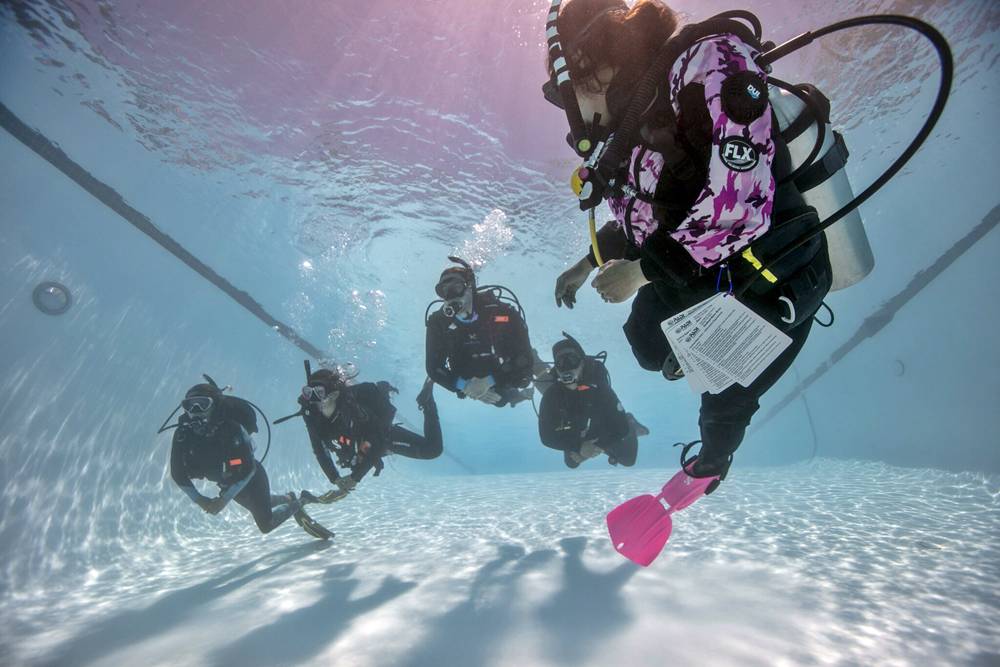
Listen carefully, even if you think you already know everything. Every dive is different, even at the same dive site. That day there may be:
- Stronger currents
- Reduced visibility
- Changes to entry or exit procedures
Missing this information can lead to:
- Extra effort and fatigue
- Higher air consumption
- Shorter dives for you and the group
- Safety risks
Ask for help when you need it (before it becomes a problem)
Struggling to set up your gear? Not sure if your tank is properly secured? Having trouble clearing your mask?
👉 Ask for help.
A small issue on the surface can turn into a serious problem underwater, especially with:
- Waves
- Current
- Stress
The same applies during the dive:
- Feeling cold
- Feeling tired
- Equipment problems
- Lost your buddy
Don’t let a “small” inconvenience escalate into a big problem. The sooner you signal it, the better.
Monitor and communicate your air consumption
During the briefing, the guide will tell you when to signal your air:
- Half tank (usually 100 bar)
- Reserve (usually 50 bar)
But be careful, these numbers may change depending on the dive, especially on deeper dives.
⚠️ Signaling too late can put you, and the group, at risk.
Key points:
- Make sure you remember the correct hand signals
- Always show your real remaining air, no embarrassment
- If in doubt, show your pressure gauge
- Never invent hand signals on the spot
When the tank runs low, you’re the one who runs out of air, not the others.
Don’t abandon the guide… they wouldn’t abandon you
If you choose to dive with the guide:
- Never swim ahead of them
- Never disappear without warning
- Never leave the group silently
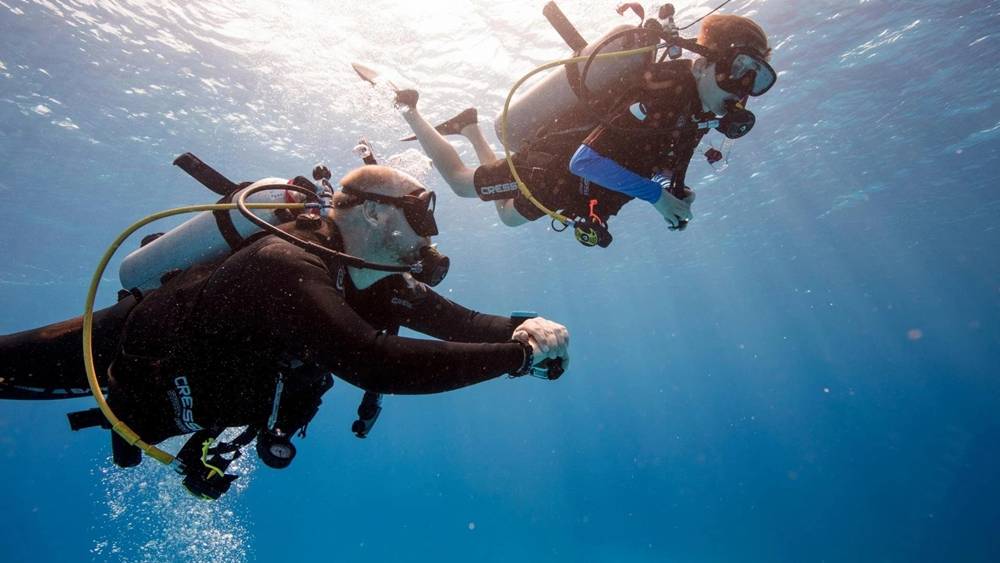
If the guide loses divers from the group:
- The dive may be cut short
- A search procedure may begin
- The rest of the group will be affected
And believe us… the other divers won’t be very happy.
If at any point you want to leave the group or end the dive, clearly inform the guide and make sure they understand you before separating.
Better divers are smarter divers
At Lanzarote Non Stop Divers, guided by PADI professionals and fully committed to safety, we believe that a good diver isn’t the one with the most dives—but the one who:
- Listens
- Communicates
- Respects the group
- Learns something from every dive
💬 Have you ever experienced any of these situations?
💬 Would you add any other tips for new divers?
Tell us in the comments 🤿
02/01/2026
Carlos Campaña
¿Dónde Estamos?
C.C. Papagayo, Avenida de Papagayo 18, local 67D
35580 Playa Blanca
Lanzarote – Islas Canarias
+34 690 80 85 08
+34 928 51 72 77
info@lanzarotenonstopdivers.com
Lanzarote Non Stop Divers
Centro de buceo en Lanzarote.
Salidas diarias, cursos de buceo de todos los niveles.
Alquiler de equipos de buceo